
Women’s heart health: are you giving your heart some love?
This October NHS Cornwall and Isles of Scilly focused on heart health. We asked Dr Amit Dhulkotia, our Population Health and Long-term Conditions Clinical Lead, to write a blog on women’s health and why it’s so important to give your heart some love.
Here’s his thoughts…
Heart disease is not just a man’s problem, it’s actually deadlier for women…
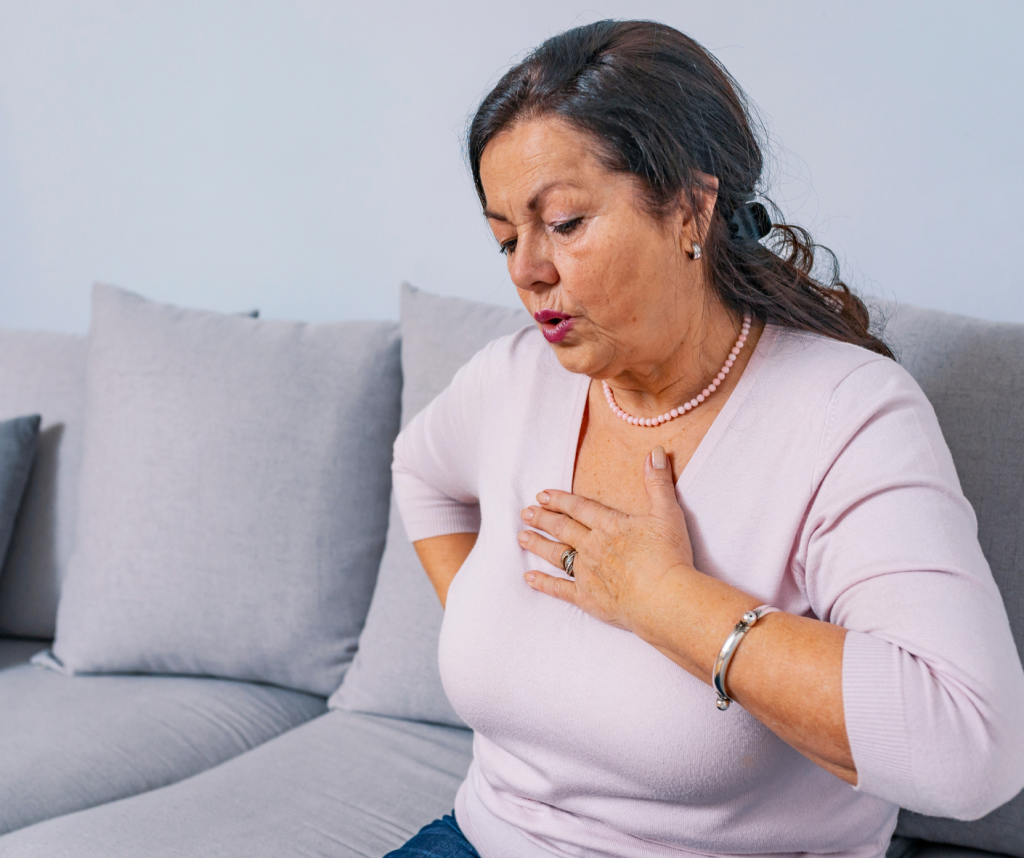
As a GP, I’ve watched too many women dismiss their chest pain as indigestion, wave off their breathlessness as stress, and delay seeking help because they didn’t think heart disease was “their problem.” It’s time we shattered this dangerous myth.
The shocking truth: Every 16 minutes, a woman in the UK is admitted to hospital with a heart attack – that’s 98 women every single day. Yet coronary heart disease remains perceived as a “man’s disease,” and this misconception is killing women. (2)
The numbers don’t lie: Women are 50% more likely to receive a wrong initial diagnosis when having a heart attack. When that happens, both men and women have a 70% higher risk of dying within 30 days.
Why This Happens
Women delay seeking help: The average delay for men ranges from 1.4-3.5 hours. For women? Between 1.8 and 7.2 hours. Because they do not believe “it could be their heart.”
Doctors miss the signs: Women’s symptoms are frequently dismissed as anxiety or indigestion. Even when women describe typical chest pain, their symptoms may be attributed to other causes without proper investigation. (3)
Treatment is unequal: Women are 34% less likely to receive timely coronary angiography, 3% less likely to receive emergency blood-flow restoration, 2.7% less likely to be prescribed statins, and 7.4% less likely to get beta-blockers after a heart attack. Women were less likely to be prescribed aspirin, or angiotensin‐converting enzyme inhibitor (5)
Risk factors hit women harder
Smoking increases women’s heart attack risk more than twice as much as men’s. High blood pressure increases women’s risk 80% more. Type 2 diabetes increases women’s risk 50% more. (1) Yet women consistently underestimate their personal risk.
What you must do
Women: Your symptoms are valid. Chest tightness, pressure, or squeezing; pain radiating to your arms, neck, jaw, back or stomach; sweating, nausea, breathlessness – these are not anxiety. Call 999 immediately.
Stop minimising your risk: Coronary heart disease kills twice as many women as breast cancer in the UK. If you have high blood pressure, diabetes, smoke, or have a family history then you are at significant risk.
Demand equal care: Ask why you are not being offered the same tests and treatments. Attend for the NHS Health Check to Know Your Numbers and Take Action, address cholesterol, blood pressure and diabetes.
The evidence is clear: women need and deserve the same standard of care as men.
Heart disease does not discriminate by gender, but our healthcare system does.
Let us change that narrative and save lives.
Know your risk. Trust your symptoms. Call 999 early. Your heart deserves equal attention and treatment.
References
- Al Hamid A, Beckett R, Wilson M, Jalal Z, Cheema E, Al-Jumeily Obe D, Coombs T, Ralebitso-Senior K, Assi S. Gender Bias in Diagnosis, Prevention, and Treatment of Cardiovascular Diseases: A Systematic Review. Cureus. 2024 Feb 15
- 2) Beery TA. Gender bias in the diagnosis and treatment of coronary artery disease. Heart Lung. 1995 Nov-Dec;24(6):427-35.
- 3) bias-and-biology-briefing.pdf BHF publication.
- 4) Bosomworth J, Khan Z. Analysis of Gender-Based Inequality in Cardiovascular Health: An Umbrella Review. Cureus. 2023 Aug 14;15(8): e43482.
- 5) Zhao M, Woodward M, Vaartjes I, Millett ERC, Klipstein-Grobusch K, Hyun K, Carcel C, Peters SAE. Sex Differences in Cardiovascular Medication Prescription in Primary Care: A Systematic Review and Meta-Analysis. J Am Heart Assoc. 2020 Jun 2;9(11): e014742.